Embarking on a journey into artificial intelligence is exhilarating, but one of the first questions you will face is which language to learn. With dozens of options floating around, picking the best programming language for AI engineering beginners can make or break your early enthusiasm. The right choice minimizes frustration, unlocks a vast ecosystem of libraries, and directly connects you to real-world projects.
In 2026, the AI landscape continues to expand at a dizzying pace, yet the fundamentals for newcomers remain surprisingly consistent. This guide cuts through the noise and examines the languages that offer the smoothest on-ramp for beginners while still providing industry-grade capabilities. You will discover why some languages dominate job listings, how each handles machine learning workflows, and what will serve you best as you move from your first tutorial to a polished AI portfolio.
Rather than chasing every new tool, focusing on a language with gentle syntax, abundant learning resources, and powerful AI libraries is the smartest move. We will explore not only the undisputed leader, Python, but also contenders like R, Java, C++, JavaScript, Julia, and MATLAB, so you understand the full picture. By the end of this article, you will have a clear answer and a roadmap to get started immediately.
Why Python Dominates AI Engineering for Beginners
The overwhelming consensus among educators, industry professionals, and researchers points to Python as the best programming language for AI engineering beginners. Its design philosophy emphasizes code readability, which allows newcomers to focus on algorithmic thinking rather than obscure syntax. When you write Python, the code often reads like pseudocode, reducing the cognitive load that comes with learning complex AI concepts simultaneously.
Beyond readability, Python boasts the richest ecosystem of artificial intelligence and machine learning libraries. From data manipulation with Pandas to building neural networks with TensorFlow and PyTorch, every major AI framework offers first-class Python support. This means that as a beginner, you spend less time writing boilerplate code and more time experimenting with models that produce tangible results early in your learning journey.
Beginner-Friendly Syntax and Readability
Python enforces clean indentation, which naturally guides beginners toward writing well-structured code. Variables do not require explicit type declarations, so you can prototype ideas quickly without getting bogged down by type errors. This dynamic nature is a double-edged sword in large systems, but for someone grasping the logic behind a linear regression or a decision tree, it eliminates unnecessary obstacles.
Many AI tutorials assume zero programming experience and start directly with Python scripts that load a dataset, train a model, and display a result in under fifteen lines. This immediate feedback loop builds confidence. Instead of wrestling with semicolons or memory allocation, you can tweak hyperparameters and instantly see the impact on accuracy, making the learning process both productive and gratifying.
Extensive AI and ML Libraries
One of the strongest arguments for Python is the sheer breadth of specialized libraries. Scikit-learn provides simple and efficient tools for classification, regression, and clustering, making it the go-to for classroom and self-study. When you are ready to dive into deep learning, PyTorch and Keras offer minimalist APIs that let you construct a convolutional neural network with just a few layers of code.
For data preprocessing and exploration, Python delivers Pandas and NumPy, which are essentially industry standards. You can load a CSV file, clean missing values, and generate descriptive statistics with one-liners. This integration means your workflow stays entirely inside one language, from raw data to deployed model, dramatically flattening the learning curve for AI engineering beginners.
Strong Community Support and Resources
A massive global community actively contributes tutorials, open-source projects, and Q&A forums. When you encounter an error—and you will—chances are someone has already solved it on Stack Overflow or published a step-by-step YouTube guide. This safety net is invaluable for beginners who lack local mentors, because you can find help at any hour.
The community also continuously maintains and updates frameworks, ensuring that Python remains compatible with the latest AI research. Cutting-edge papers often include links to GitHub repositories written in Python, allowing you to replicate results and learn directly from the source. This immediacy between academia and practice is difficult to find in any other language ecosystem.
Versatility Beyond AI
Python is not an isolated niche language; it threads through web development (Django, Flask), automation, cybersecurity, and even game development. For a beginner, this versatility means that time invested in learning Python pays dividends beyond machine learning. You can build a simple web app to showcase your AI model or write a script that scrapes training data from the web, all using the same skill set.
Employers value this breadth. A candidate who knows Python can contribute to data pipelines, API endpoints, and internal tooling, not just standalone notebooks. Thus, starting with the best programming language for AI engineering beginners gives you a career-long technical foundation that adapts as the AI field evolves.
Read Also: Essential Python Libraries for AI Engineering Jobs [apc_current_year]
Comparing Python with R for Data Science and AI
R enjoys a revered position in academic statistics and data analysis, often prompting beginners to wonder if it rivals Python for AI engineering. While R excels at statistical modeling and data visualization, its role in mainstream AI and production systems is more limited. Understanding where each language shines helps you allocate your learning hours wisely.
Both languages have thriving communities and excellent package ecosystems. However, the design philosophies differ: R was created by statisticians for statisticians, whereas Python was built as a general-purpose language that later absorbed powerful scientific libraries. This distinction heavily influences the beginner experience and the long-term career trajectory in AI.
R for Statistical Modeling
R’s syntax is purpose-built for data analysis. Tasks like fitting a generalized linear model, conducting hypothesis tests, or generating publication-quality plots often require fewer lines in R than in Python. Packages such as ggplot2 and dplyr are legendary for their expressiveness, and the RStudio IDE provides a seamless environment for exploratory analysis.
For a beginner whose primary goal is statistical inference or bioinformatics, R can feel intuitive. Many universities still teach introductory statistics using R, so if your AI interest is heavily skewed toward classical data mining rather than deep learning, R remains a powerful tool. Nevertheless, its syntax can become inconsistent when you move beyond statistical workflows.
Python for Production-Ready AI
Python’s edge emerges when you need to deploy models into applications, integrate with cloud services, or build end-to-end pipelines. Libraries like MLflow and FastAPI allow you to wrap a trained model in a REST API within minutes. R, while it has tools like Plumber, lacks the same depth of deployment and scaling frameworks.
Most AI engineering roles expect proficiency in Python because the entire MLOps movement—automating the machine learning lifecycle—is built around Python tooling. If your ambition includes putting AI into products used by thousands of people, Python’s production-readiness makes it the better long-term investment, even if the initial statistical syntax feels slightly less ad hoc than R’s.
Which One Should Beginners Choose?
If you are strictly focused on becoming an AI engineer, starting with Python gives you a direct path to the core libraries that dominate job descriptions. You can always pick up R later for specialized statistical tasks, and your Python foundation will make the transition smoother because programming logic transfers across languages.
Beginners who start with R often find themselves needing to learn Python anyway when they encounter deep learning, natural language processing, or deployment scenarios. Thus, choosing Python first avoids duplication of effort and ensures that every learning hour pushes you closer to real-world AI engineering competency.
Learning Curve Considerations
R uses vectorized operations deeply embedded in its design, which can confuse newcomers accustomed to typical imperative loops. While this is powerful for data frames, it adds an extra conceptual layer. Python’s libraries like NumPy also use vectorization but allow for more gradual adoption, thanks to abundant beginner-focused tutorials that bridge the gap gently.
Moreover, the Python ecosystem invests heavily in learner-friendly documentation. Websites, interactive notebooks, and code playgrounds reinforce Python basics alongside AI concepts, making the initial climb less steep for absolute beginners. This supportive infrastructure solidifies Python’s standing as the best programming language for AI engineering beginners, especially when compared with R.
Read Also: How Long to Become an AI Engineer? Your [apc_current_year] Guide
Java and C++ for AI: When to Consider Them
Java and C++ are often mentioned in discussions about high-performance AI systems, especially in large enterprises and embedded robotics. While neither ranks as the best programming language for AI engineering beginners, understanding their roles helps you make an informed decision if your career path points toward specific industries.
Both languages sacrifice some of Python’s rapid prototyping speed in exchange for raw execution performance and fine-grained control. For a beginner, this trade-off usually means a steeper learning curve and more time spent on memory management and verbose syntax before you ever train a model.
Java’s Portability and Enterprise Use
Java’s “write once, run anywhere” philosophy makes it attractive for large-scale, cloud-based AI services that must integrate with existing enterprise ecosystems built on the JVM. Libraries like Deeplearning4j and Weka enable machine learning in Java, and tools like Apache Spark rely heavily on Java and its JVM cousin, Scala, for distributed data processing.
However, building a simple neural network in Java requires significantly more boilerplate code than in Python. For a beginner, this extra ceremony obscures the AI logic. Java is better suited as a second language once you already grasp core machine learning concepts and need to embed models into Android apps or corporate microservices.
C++ for High-Performance AI Engines
C++ powers the backends of many AI frameworks, including TensorFlow and PyTorch. When you train a deep model in Python, the heavy computation actually runs on highly optimized C++ and CUDA kernels. Directly writing AI code in C++ gives you the ability to squeeze out maximum performance, which is critical for real-time systems like self-driving cars or trading bots.
Yet, for most AI engineering beginners, gaining that extra performance is unnecessary during the learning phase. The complexity of pointers, manual memory management, and lengthy compilation cycles diverts attention from understanding gradient descent or attention mechanisms. Starting with C++ can lead to burnout before you reach the first meaningful AI milestone.
Complexity and Debugging Challenges
Debugging AI models is inherently tricky; adding language-level pitfalls like segmentation faults and undefined behavior compounds the difficulty. Beginners often mistake a flaw in model architecture for a programming bug, and diagnosing that in C++ takes considerably longer than in Python’s forgiving runtime.
Java’s checked exceptions and verbose syntax can also slow down experimentation. Rapid iteration is the heart of AI prototyping, and neither Java nor C++ offers the immediate, interactive feedback loop that a Jupyter Notebook with Python does. That loop is essential for a beginner to develop intuition about data and models.
Use Cases: Robotics and Game AI
In fields like robotics, where you interface directly with hardware sensors and actuators, C++ remains dominant. ROS (Robot Operating System) relies heavily on C++, and game engines such as Unreal Engine use C++ for AI behaviors. If your dream job lies strictly in robotic engineering or game development, learning C++ in parallel with Python can be a strategic move later on.
For virtually every other AI domain—computer vision, NLP, recommendation systems—you can build a stellar portfolio and land a job using Python alone. Therefore, beginners should park Java and C++ until they have a solid AI foundation, at which point picking up a lower-level language becomes a manageable expansion, not a barrier.
Read Also: Entry-Level AI Engineer Job Description [apc_current_year]
JavaScript and TensorFlow.js: AI in the Browser
The rise of JavaScript-based AI, particularly through TensorFlow.js, has opened up new possibilities for deploying models directly in the browser or on Node.js servers. While not the first choice for heavy model training, JavaScript allows beginners with a web development background to enter the AI space without switching languages.
For someone who already knows HTML, CSS, and JavaScript, adding AI capabilities to an existing skill set can be incredibly motivating. You can build interactive demos that run entirely client-side, making your projects immediately shareable with friends, recruiters, or a wider audience via a simple URL.
Web-Based AI Applications
TensorFlow.js enables real-time pose detection, object recognition, and style transfer within the browser. This means you can create applications that use the webcam without any backend infrastructure. For a beginner, seeing a model classify hand gestures live on a webpage is a powerful hook that accelerates learning.
However, client-side machine learning is limited by the user’s hardware and browser performance. Training complex deep learning models from scratch in the browser remains impractical. Most applications use pre-trained models converted to TensorFlow.js format, which limits the scope of what you can build and learn if your goal is to understand model internals.
TensorFlow.js Capabilities
The library provides two layers: an Ops API for low-level tensor operations and a Layers API that mirrors Keras, allowing you to define and train models using a familiar high-level syntax. You can even import Python-trained models and run them in the browser for inference, bridging the gap between server-side training and client-side deployment.
This setup can be a fantastic supplementary tool for an AI beginner. You might train a simple image classifier in Python using Google Colab, export it, and then build an interactive web app around it with JavaScript. The combination reinforces both AI concepts and software engineering practices without overwhelming you.
Limitations for Heavy AI Workloads
JavaScript is single-threaded by nature, and while Web Workers offer some parallelism, the ecosystem lacks the rich scientific computing libraries that Python has accumulated over decades. Data preprocessing, feature engineering, and large-scale model training are cumbersome compared to the Pandas-plus-PyTorch workflow.
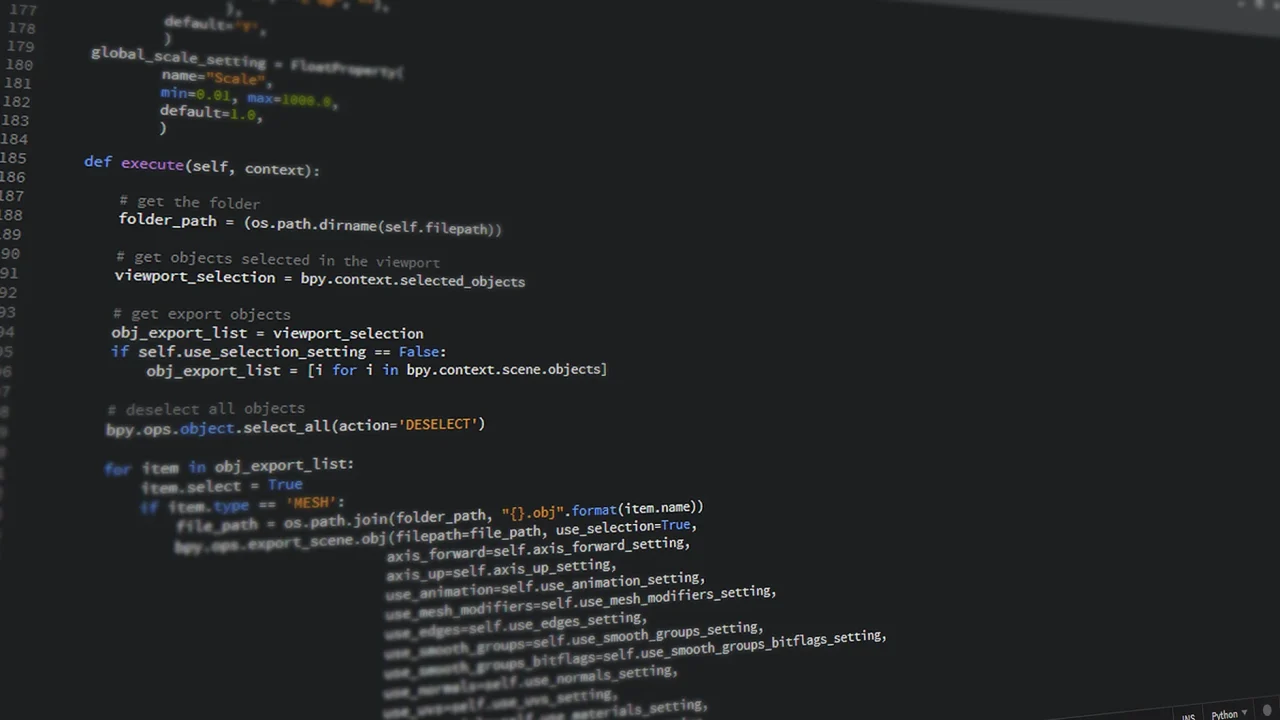
Additionally, the majority of AI research and education materials assume Python. Tutorials, academic papers, and open-source models rarely include JavaScript implementations. As a primary language for AI engineering beginners, JavaScript forces you to constantly translate concepts, which slows down your progress and can lead to knowledge gaps.
Benefits for Frontend Developers
If you are already a frontend developer aiming to pivot into AI, JavaScript with TensorFlow.js lowers the entry barrier significantly. You can start implementing intelligent features in your web apps immediately and incrementally learn the underlying mathematics. This path can lead to roles that bridge UI and AI, which are increasingly in demand.
Still, even in this scenario, it is wise to learn Python alongside your JavaScript work. Understanding the standard AI development process in Python makes you more versatile and enables you to read the vast body of existing AI literature. Then, bringing those insights back to the browser becomes a superpower, not a limitation.
Read Also: Computer Vision Engineer Career Path & Requirements
Julia: The Rising Star for Numerical AI
Julia has been gaining attention in scientific computing circles for its promise of combining the ease of Python with the speed of C++. For AI engineering beginners, Julia presents an intriguing but still niche option. It aims to solve the “two-language problem,” where researchers prototype in a high-level language and then rewrite in a faster one for production.
Although Julia’s ecosystem is growing, it hasn’t yet reached the critical mass needed to be the best programming language for AI engineering beginners. The libraries are maturing, but the community size, number of tutorials, and industry adoption lag significantly behind Python, which directly affects the beginner experience.
Speed and Mathematical Notation
Julia’s just-in-time compiler generates optimized machine code, often reaching performance close to C. For a beginner, this means you can write high-level loops that look like Python but run fast without vectorization tricks. The language also supports unicode characters, allowing code to mirror mathematical expressions closely, which appeals to learners from a math background.
Despite these advantages, the faster runtime is rarely a bottleneck for beginner projects. Most initial models are small and run adequately in Python. The mental overhead of dealing with Julia’s compilation latency and the occasional type-instability issues can distract from core AI concepts.
Growing Ecosystem for AI
Flux.jl and Lux.jl are pure-Julia deep learning frameworks that leverage the language’s strengths. They offer elegant, composable architectures that are a joy to use once you are comfortable with Julia. The SciML ecosystem also provides powerful tools for scientific machine learning, bridging differential equations and neural networks.
Nevertheless, these libraries still miss the extensive model zoos and pre-trained weights that Python frameworks offer. A beginner who wants to fine-tune a BERT model or load a ResNet checkpoint will find far fewer ready-made resources in Julia. This pragmatic gap can stall projects that depend on state-of-the-art models.
Why It’s Not Yet the Go-To for Beginners
Community support is the lifeblood of early-stage learning. When you encounter an error in Julia, you may wait longer for a response or discover that the documentation doesn’t cover your use case as thoroughly. Python’s massive Q&A history and beginner-oriented video courses simply don’t exist at the same scale for Julia yet.
Moreover, most AI job descriptions do not mention Julia. Learning a language that few employers actively seek can be a strategic misstep for someone entering the field. While Julia is worth exploring as a secondary language later, anchoring your AI engineering foundation in it would introduce unnecessary friction.
Learning Resources
That said, MIT and other universities have started incorporating Julia into computational science courses. If your ambition is deeply tied to high-performance scientific computing or algorithm research, Julia offers a compelling glimpse into the future. Beginners can experiment with Julia through platforms like JuliaHub, but doing so after grasping AI basics in Python is advisable.
In summary, Julia is an exciting language that deserves monitoring, but it currently cannot dethrone Python as the best programming language for AI engineering beginners. It is best approached as an accelerator for specific computational tasks rather than as a starting point.
Read Also: Essential Math Skills for AI Engineers
MATLAB and Octave: Academic AI Tools
MATLAB has long been a staple in university engineering and mathematics departments. Its toolboxes provide integrated environments for signal processing, control systems, and now deep learning. For students already immersed in a MATLAB-centric curriculum, it can seem like a natural gateway into AI.
However, MATLAB is proprietary and expensive, which limits accessibility for self-taught beginners. While student licenses and scaled-down home versions exist, the open-source alternative, GNU Octave, only partially bridges the gap. This licensing barrier, combined with a smaller AI community, makes MATLAB a less practical choice for most aspiring AI engineers.
Simulink and Prototyping
MATLAB’s real strength lies in its seamless integration with Simulink for model-based design. Engineers building autonomous systems or control algorithms for hardware can prototype, simulate, and deploy AI models within a single graphical environment. The Deep Learning Toolbox offers a drag-and-drop interface for designing networks.
For a beginner whose background is in hardware or mechatronics, MATLAB removes the need to learn a separate programming language initially. Yet, this convenience comes at the cost of lock-in; the skills you acquire are less transferable to the broader AI industry, which predominantly uses open-source tools.
Cost and Accessibility
A full MATLAB license with the required AI toolboxes can cost thousands of dollars annually. For independent learners, this is a non-starter. Python, R, and Julia are free and run on any machine, lowering the financial barrier to zero. Accessibility is a key factor when choosing the best programming language for AI engineering beginners, and proprietary software fails that test.
Even if your university provides free access, you lose it after graduation. Rebuilding your workflow in open-source tools later requires unlearning MATLAB-specific functions and philosophies, effectively doubling your effort. Starting with Python from day one avoids this painful migration.
Best for Academic Research
In niche academic circles—especially in signal and image processing—MATLAB remains entrenched. Some advanced researchers release code only in MATLAB. If your academic supervisor insists on it, learning MATLAB is unavoidable for that project, but you can still maintain your core AI skills in Python on the side.
For a self-directed beginner, however, the returns on MATLAB are slim. The same algorithms can be implemented in Python with scipy and scikit-image, often with more community-contributed examples. The academic paper may include a MATLAB repo, but the Python community often creates unofficial ports that are excellent learning resources.
Alternatives
Python’s Matplotlib and Seaborn libraries now rival MATLAB’s plotting capabilities. Jupyter notebooks offer an interactive, cell-based environment similar to MATLAB’s live scripts, but with the added advantage of combining code, markdown, and rich outputs in a shareable format. The transition from a MATLAB-like workflow to Python is much smoother than many anticipate.
Given these factors, MATLAB is not recommended as a starting point for AI engineering beginners unless you are in a specific academic or industrial environment that mandates it. Python delivers equivalent functionality with greater freedom and a brighter career outlook.
Read Also: AI Engineer Certifications for Career Advancement
Low-Code and No-Code AI Platforms
A growing trend in AI is the rise of low-code and no-code platforms that promise to make machine learning accessible without writing a single line of code. Tools like Google’s Teachable Machine, Lobe, and cloud AutoML services allow you to train models by dragging and dropping data and configuring parameters through a visual interface.
While these platforms are not programming languages, they influence the decision of what to learn first. For a total beginner, they offer a tantalizing glimpse of AI’s power and can serve as a motivational on-ramp before diving into actual code. However, they cannot replace a programming language for serious AI engineering.
Democratizing AI Development
Teachable Machine, for example, lets you train an image classifier using your webcam in minutes. This immediacy demystifies AI and proves that you can build models without a PhD. For absolute beginners who are intimidated by code, such platforms build confidence and provide a tangible result to share with friends and family.
Yet, the underlying model is often a black box. You don’t learn about data preprocessing, loss functions, or evaluation metrics. Relying solely on no-code tools leaves you unprepared to customize solutions, debug failures, or work in a team that engineers AI models from scratch.
Tools like Teachable Machine and AutoML
Cloud providers offer AutoML services that automate feature engineering, hyperparameter tuning, and model selection. These can generate highly accurate models for tabular data, images, and text. For a beginner, using Google Cloud AutoML or Azure Machine Learning can be eye-opening, but it also abstracts away the very skills you need to develop as an AI engineer.
Many AI engineering roles require understanding how to improve a model that an AutoML system produced, aligning data pipelines, or optimizing inference latency. These tasks demand programming knowledge. As a supplementary learning aid, AutoML is fantastic; as a primary strategy, it creates a fragile skill set.
When to Transition to Coding
A practical approach is to use a no-code tool to build a fun project in your first weekend, then immediately begin learning Python to understand what happened behind the scenes. For instance, after training a cat-versus-dog classifier with Teachable Machine, you can replicate the same task using Python and Keras. This side-by-side comparison accelerates comprehension.
Transitioning early prevents the “no-code plateau.” You will soon want to preprocess messy data, merge multiple datasets, or deploy a custom API endpoint—tasks impossible or extremely constrained in visual tools. A programming language like Python gives you unlimited flexibility to turn ideas into robust products.
Supplementing Learning
Low-code platforms can be invaluable later in your career for rapid prototyping and client demos. Understanding their capabilities makes you a more well-rounded engineer. But the core journey to becoming proficient in AI engineering starts by learning to write, read, and debug code in the best programming language for AI engineering beginners.
Therefore, treat no-code as a complementary spark, not the main engine. Let it ignite your curiosity, then channel that excitement into the deeper, more rewarding work of learning Python and the AI libraries that power the intelligent applications of today and tomorrow.
Read Also: AI Ethics for Engineers: Navigating Responsible Development
Building Your First AI Project: Language Selection
The ultimate test of your language choice happens when you build your first real AI project. Moving from isolated tutorials to an end-to-end application—whether it is a movie recommender, a sentiment analyzer, or a simple chatbot—solidifies your learning. The language you pick profoundly influences how quickly you can go from idea to working prototype.
Your first project should be achievable but stretch your skills. Using a language that eliminates friction in data loading, model training, and result visualization allows you to focus on problem-solving rather than fighting syntax. This is precisely why Python dominates beginner portfolios.
Defining Your Project Goals
Start by scoping a project that excites you personally. Maybe you want to classify your favorite music genres or detect plant diseases from leaf photos. Clear, specific goals prevent scope creep. With Python, you can immediately search for similar open-source projects on GitHub and find starter code that you can adapt.
If you had chosen a less popular language, you might face the discouraging scenario of having to write everything from scratch. The availability of reference implementations is an underestimated factor in sustaining beginner momentum, and Python’s repository of projects is unparalleled.
Choosing Based on Community and Tutorials
For any beginner project idea—house price prediction, face mask detection, fake news classifier—you will find a step-by-step Python tutorial. This scaffolding is exactly what you need: it gives you a working baseline, which you then modify and break and fix, deepening your understanding. The same cannot be said for Julia or JavaScript when it comes to tabular machmachine learning
Furthermore, AI-specific Q&A communities like Stack Overflow and the PyTorch forums are most active for Python. When you hit a stumbling block during your project, fast, high-quality assistance keeps you moving forward. The network effect of a large user base reinforces Python’s position as the best programming language for AI engineering beginners from a purely practical standpoint.
Prototyping with Python
Python’s interactive shells and Jupyter notebooks invite experimentation. You can load a chunk of data, visualize its distribution, train a preliminary model, and immediately interpret an accuracy score—all within a single notebook. This tight feedback loop is addictive in the best way and encourages exploratory analysis that often leads to better model insights.
When you are ready to share your work, you can convert the notebook into a blog post or a live web demo using Streamlit or Gradio, again using Python. This end-to-end capability means that your first project can become a portfolio piece that demonstrates not just AI knowledge but a complete, deployable application.
Iterate and Expand
After completing the first version, you might want to integrate a more advanced technique like transfer learning or add a database to store user predictions. Python’s ecosystem scales smoothly with your ambition. You can add FastAPI for a backend, Docker for containerization, and cloud SDKs for deployment, all building on your initial codebase.
This iterative growth is where the long-term value of your language choice becomes evident. A language that served your simple classifier should also serve your production-ready API. Python not only starts you gently but also stays with you as your skills advance into professional AI engineering.
Read Also: Python AI Engineer Required Skills List | Complete Guide
Conclusion
After examining the major contenders, the evidence is overwhelming: Python is the best programming language for AI engineering beginners in 2026. Its clean syntax, unmatched library ecosystem, and massive community create an environment where you can focus on the art and science of AI rather than on the tooling. Whether you dream of building self-driving cars, intelligent chatbots, or sophisticated recommendation systems, Python provides the most direct and supportive path.
Languages like R, Java, C++, JavaScript, Julia, and MATLAB each have their place in specialized niches, but they introduce unnecessary obstacles for someone taking their first steps. By starting with Python, you maximize your learning speed, build transferable skills, and join a global network of learners and professionals who share your passion. The time you might spend wrestling with alternative languages is better invested in understanding data, experimenting with models, and creating projects that demonstrate your new abilities.
Your journey into AI engineering begins with a single decision. Let that decision be Python, backed by the confidence that you have chosen the tool that millions of successful engineers and researchers rely on daily. From your first “Hello, world!” to your first deployed neural network, Python will be the reliable companion that turns your curiosity into a rewarding career.

FAQ
The best programming language for AI engineering beginners is widely recognized as Python. Its simple syntax, enormous collection of AI and machine learning libraries, and extensive beginner-friendly tutorials make it the most efficient and rewarding starting point. Python allows you to build everything from basic classifiers to advanced deep learning models without being hindered by complex language rules.
You can explore fundamental AI concepts using low-code or no-code platforms like Teachable Machine or AutoML services. However, to become an AI engineer who can design, customize, and deploy models at scale, programming is essential. Learning a language like Python gives you the control and flexibility that visual tools cannot provide, making it a non-negotiable skill for serious career growth.
Python is considered the top choice because it balances ease of learning with professional-grade capabilities. Beginners appreciate its readable, pseudocode-like syntax, while industry professionals rely on its powerful libraries such as TensorFlow, PyTorch, and Scikit-learn. The language also enjoys a huge community, which means abundant free resources, rapid bug fixes, and a continuous stream of updated AI research implementations.
For AI engineering, learning Python first is generally more strategic. R excels at statistical analysis and data visualization, but Python covers those areas well and goes much further into deep learning, natural language processing, and model deployment. Starting with Python gives you a versatile foundation; you can add R to your toolkit later if your work requires specialized statistical modeling.
The time required varies based on your prior programming experience and the depth of AI you wish to attain. A dedicated beginner spending 10–15 hours per week can often build a basic AI project within two to three months. Reaching a job-ready proficiency, including a solid portfolio, typically takes six to twelve months of consistent study and hands-on practice with Python and its AI libraries.